
Self Assessment Accountants Harrow Blog
Plain-English guides on Self Assessment, tax deadlines, expenses, and how to pay less tax legally.

Self Assessment Tax Returns Explained
Self Assessment is HMRC's system requiring over 12 million UK taxpayers to report income from self-employment, rentals, dividends, and other untaxed sources annually. It serves as an annual tax report...
Who Needs to File a Self Assessment Tax Return?
HMRC requires over 11 million UK taxpayers to file Self Assessment returns annually, with specific rules targeting self-employed workers, directors, and partners. This stems from the Taxes Management ...

Self Assessment Deadlines Explained
Self Assessment is HMRC's annual tax reporting system requiring over 12 million UK taxpayers, including self-employed sole traders, landlords, and company directors, to file a SA100 form declaring inc...

How to Register for Self Assessment
Self Assessment is HMRC's system for individuals and businesses to calculate and pay their own Income Tax and National Insurance contributions directly. It applies to the self-employed, high earners, ...

Allowable Expenses for Self Employed People
Self-employed individuals can claim up to 25% of home office costs under HMRC simplified expenses or calculate actual business-use proportions for higher deductions. HMRC offers two main methods for h...

Self Assessment for Landlords
Conduct a comprehensive property condition assessment using standardized checklists from RICS (Royal Institution of Chartered Surveyors) to identify tax-deductible maintenance costs and capital improv...

Self Assessment for Company Directors
UK boards conducting annual self-assessments see higher governance maturity scores according to the 2024 FRC Board Effectiveness Guidance. These evaluations help company directors meet fiduciary dutie...

How to Reduce Your Self Assessment Tax Bill
Your Self Assessment tax bill comprises income tax, National Insurance contributions, and payments on account, with HMRC requiring SA100 main form plus supplementary pages like SA103 for self-employme...

Common Self Assessment Mistakes
Overconfident self-raters often score higher than their peer assessments in performance reviews. This gap between self-perception and reality erodes credibility with managers during employee appraisal...

Self Assessment Record Keeping Guide
HMRC asks the self-employed to keep their records for at least five years after the 31 January deadline. Here is what to keep, how long to keep it, and how digital record keeping changes from April 2026.

Filing Your Self Assessment Online
Self Assessment is HMRC's system requiring over 12 million UK taxpayers to report income from self-employment, rentals, dividends, and capital gains annually. It covers more than 10 income types and a...

Self Assessment Penalties Explained
Self-assessment penalties are financial charges imposed by HMRC for failing to file your SA100 tax return by 31 January (online) or 31 October (paper), with initial fixed penalties starting at £100 re...

Late Self Assessment Returns
Top excuses include 'I forgot I needed to file' (42% of cases), 'too busy with work' (28%), and 'didn't think I owed tax' (19%) per HMRC's 2023 behavioural analysis. These reflect real patterns in lat...
Self Assessment Tips to Save Tax
UK Self-Assessment requires sole traders, landlords, and high earners to file annually with HMRC. You must register if your trading income or rental income exceeds £1,000, or if your salary tops £100,...

How Accountants Help with Self Assessment
Self Assessment requires UK taxpayers with untaxed income over £1,000 or complex tax situations to file SA100 forms by January 31st online or October 31st by paper. This system helps HMRC calculate in...
Who Exactly Needs to File a Self-Assessment in 2026 (Threshold Update)
The 2026 filing requirement isn't one threshold, it's twelve overlapping ones. Self-employed, landlord, high earner, dividend, foreign income, capital gains, child benefit recipient, partner in a partnership: each carries its own trigger, and the rules tightened materially when the high-income child benefit charge moved to £80,000 in April 2024.
Understanding the SA302: How to Get Your Tax Calculation for Mortgages
The SA302 is HMRC's formal tax calculation summary, and most UK mortgage lenders treat it as the gold-standard proof of self-employed income. Self-employed mortgage applications routinely stall because the borrower cannot produce SA302s in the format the lender wants.
Registering for Self-Assessment: Navigating the UTR Number Process
Registering for Self-Assessment looks like a one-form exercise. It isn't. Three different forms apply depending on circumstances, the UTR arrives 10 to 21 days later, Government Gateway has a separate enrolment step, and the 5 October deadline carries its own penalty regime independent of late filing.
Paper vs Online Filing and Why Digital Is Now the Only Viable Path
Paper and online filing carry different deadlines and very different futures. Paper now ships only on request, its deadline falls three months earlier, and Making Tax Digital is steering everything towards digital-only filing.
How to Correct an Error on a Previously Submitted Tax Return
Finding a mistake after filing is common and usually fixable. Within 12 months of the deadline you amend online; beyond that you claim overpayment relief or make a disclosure, depending on the error.
Tax-Free Allowances from the Personal Allowance to the £1,000 Trading Allowance
The UK tax system layers several tax-free allowances on top of each other. Used together, the personal, savings, dividend, trading, property, and marriage allowances shield a meaningful slice of income from tax.
Missing the 31 January Self Assessment Deadline: The Penalties Explained
Missing 31 January triggers an automatic £100 penalty on day one, daily £10 charges after three months, and tax-geared 5% penalties at six and twelve months. Late payment runs on its own clock with interest on top.

The 60% Tax Trap Explained: The £100k Personal Allowance Taper
Between £100,000 and £125,140 of income, the UK tax system applies a 40% headline rate plus a withdrawn personal allowance, producing a 60% effective marginal rate. Pension contributions and Gift Aid are the standard moves to step out of it.
Dividend Tax Rates and the Tax-Efficient Salary-Dividend Mix (2026/27)
UK dividend tax rates run at 10.75%, 35.75%, and 39.35% above a £500 allowance from 6 April 2026. For owner-directors, blending salary, dividends, and employer pension contributions is the central remuneration question each year.
Reporting Benefits in Kind: P11D Compliance for Company Directors
Benefits a company provides to its directors, from a company car to private medical cover, are taxable and reported on the P11D. The form carries a Class 1A National Insurance charge, has fixed July deadlines, and is changing as payrolling becomes mandatory from April 2027.
High Income Child Benefit Charge Thresholds for 2026 to 2027
For 2026/27 the High Income Child Benefit Charge begins at £60,000 of adjusted net income and removes the benefit in full by £80,000. The figure it tests is not your salary but your adjusted net income, and that distinction is what makes the charge both avoidable and easy to trip over.
Using EIS and VCT Relief in a High Earner's Tax Plan
EIS and VCT investments give Income Tax relief that can take a large slice off a high earner's bill, but they carry real investment risk and they do not touch adjusted net income. Understanding both halves of that is what separates a sensible part of a plan from a costly misunderstanding.
Director's Loan Accounts and Your Personal Tax Return
An overdrawn director's loan account is best known for the corporation tax charge it triggers on the company, but it also lands on your personal return in two ways: a beneficial loan benefit while the balance is outstanding, and a dividend charge if the loan is written off.
How to Reduce Your Payments on Account if Profits Fall
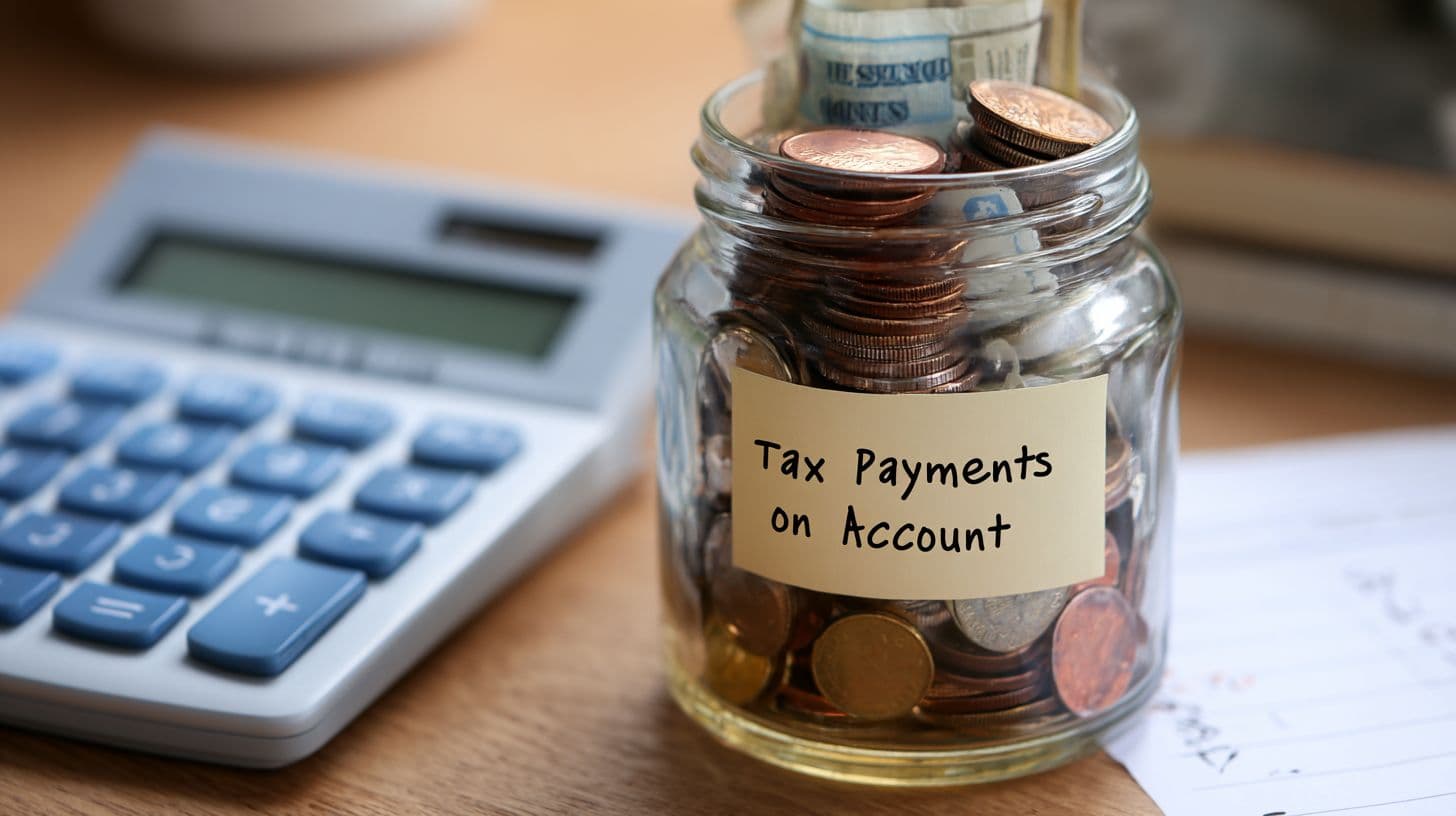
Payments on account are set from last year's tax bill, so a year of lower profits can leave you paying instalments that bear no relation to what you will actually owe. You can ask HMRC to reduce them, but cutting them too far carries an interest cost of its own.

Combining PAYE, Dividends and Rental Income on One Tax Return
Once your income comes from more than one place, the difficulty is no longer any single figure but the way salary, dividends, rental profit and savings interest stack on top of each other. The order they are taxed in, and the thresholds each one drags you towards, is where multiple income streams catch people out.

The 60-Day CGT Rule When You Sell a UK Residential Property
Sell a buy-to-let, a second home or an inherited property that is not your main residence and you have just 60 days from completion to report the gain and pay the tax. It is a separate deadline from your annual return, it runs on calendar days, and missing it carries its own penalties.
How Crypto Gains Are Taxed on Your Self Assessment Return
HMRC treats cryptoassets held as investments like shares: most disposals are subject to Capital Gains Tax, worked out through pooling and the same matching rules that apply to a share portfolio. The traps are in what counts as a disposal and how the pool is calculated.
Business Asset Disposal Relief: The Reduced CGT Rate on Selling Your Business
Selling a business, or shares in your own trading company, can qualify for Business Asset Disposal Relief, a reduced Capital Gains Tax rate up to a £1 million lifetime limit. The rate has been rising, and the qualifying conditions have to be met for a full two years before the sale.

Using Capital Losses to Cut Your CGT Bill
A losing investment is not just a loss; used properly it reduces the tax on your gains. But capital losses only work if you report them, and the order they are applied in, the four-year claim window, and the way they interact with your annual exemption all decide how much they actually save.