
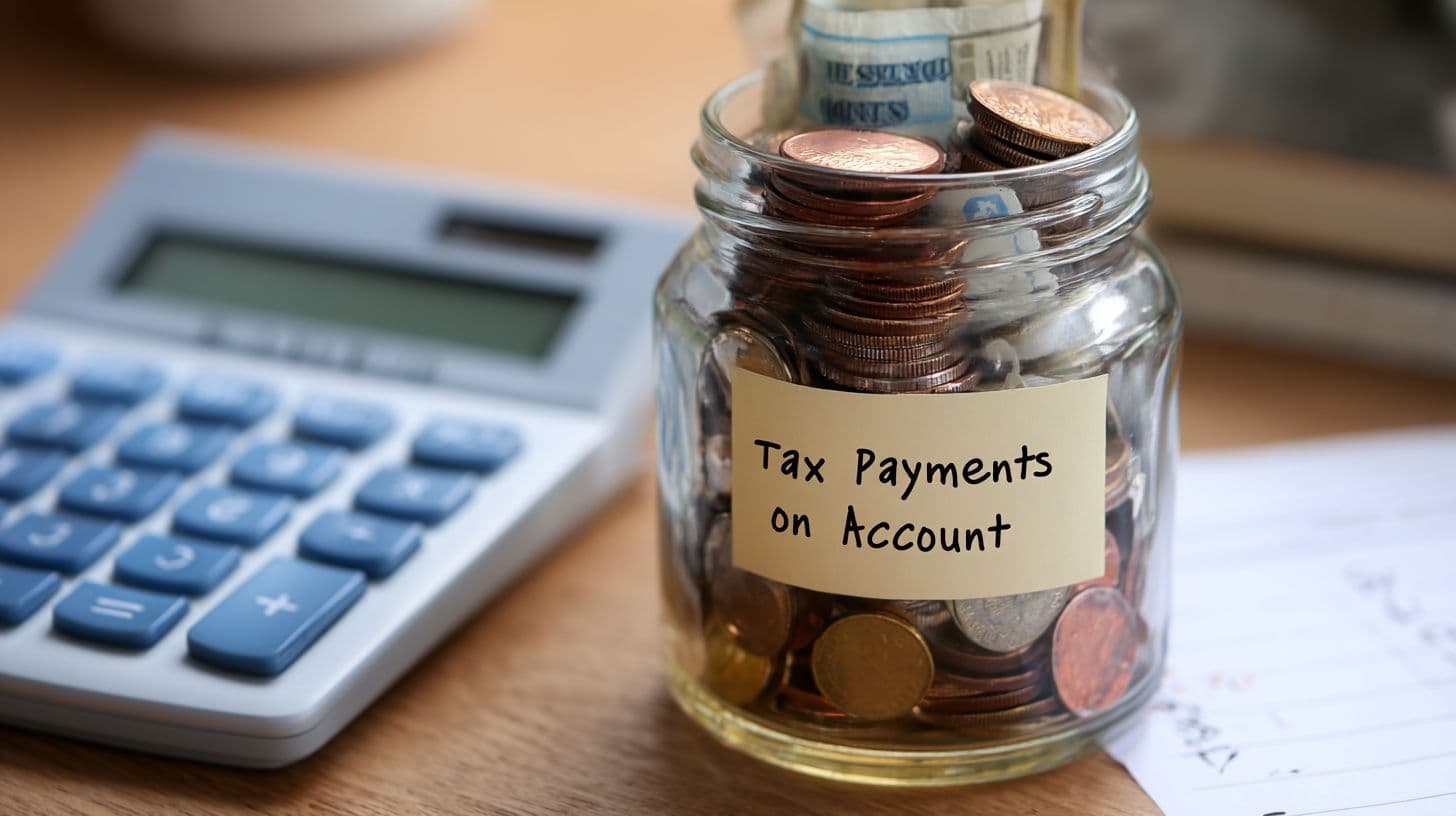
Payments on account are HMRC's way of collecting next year's tax in advance, in two instalments. The catch is that they are based on the tax you owed last year, not the tax you will owe this year. In a steady year that is reasonable. In a year where your profits fall, a contract ends, you take time out, or a one-off gain last year inflated the bill, those instalments can be far higher than your real liability. The good news is that you do not have to pay an amount you know is too high and then wait for a refund. You can ask HMRC to reduce your payments on account, and this guide sets out when that is worth doing, how to do it, and the one trap to avoid.
Why your payments on account may be too high
Each payment on account is usually half of the previous year's tax bill, and the two instalments are due by 31 January and 31 July. They only apply at all if last year's Self Assessment bill was £1,000 or more and less than 80% of your tax was collected at source through PAYE or similar deductions. If you are still getting to grips with how the two instalments are worked out and how the 31 January balancing payment sits alongside them, it is worth fixing the mechanics in your mind before deciding whether to reduce.
Because the figure is anchored to last year, any reason your income is genuinely lower this year is also a reason your payments on account are overstated. A self-employed trader whose turnover has dropped, a landlord who has sold a property, a freelancer between contracts, or anyone whose previous bill was pushed up by a capital gain or a single large invoice that will not repeat, all end up being asked for instalments that exceed what the year will actually produce. Left alone, you would overpay in January and July and reclaim the difference the following January, with HMRC holding your cash in the meantime.
Get Help With Self Assessment
We prepare and file Self Assessment returns, with a fixed written quote within 48 hours. No obligation.
How to claim a reduction
You reduce payments on account by telling HMRC what you expect this year's tax bill to be, and they recalculate the instalments from that estimate rather than from last year. What you give HMRC is the total Self Assessment tax and Class 4 National Insurance you expect for the year, not the instalment figure itself, and they halve it to reset each payment. The simplest route is online: sign in to your HMRC online account, go to the Self Assessment section and enter the figure you expect to owe. If you file on paper or prefer to, you can send form SA303 to your tax office instead. Either way you are not filing your return early; you are giving HMRC a forecast so the advance payments are set at a sensible level.
A claim can be made at any time up to 31 January after the tax year ends, so you can adjust before the January instalment, before the July instalment, or both as your view of the year firms up. If you have already paid an instalment that turns out to be too high, reducing the total can bring the figure already paid above what is now due, and HMRC repays the excess. It helps to base the estimate on real figures, your management accounts, bookkeeping totals or a realistic projection, rather than a hopeful guess, because the estimate is the number HMRC will hold you to.
The interest trap of reducing too far
Reducing payments on account is not a free option. If you cut them below what you actually end up owing, HMRC charges interest on the shortfall, calculated from the original due dates of 31 January and 31 July as though the full instalments had been due all along. So a reduction that turns out to be too aggressive is effectively an interest-bearing loan from HMRC that you did not mean to take. The rate is not trivial: since 6 April 2025 HMRC late payment interest has been set at the Bank of England base rate plus four percentage points, a margin the ICAEW flagged when the increase was announced, and that works out at 7.75% from 9 January 2026. Interest also runs from the day after each due date until the shortfall is cleared, and because it is not deductible against your own tax there is no relief to soften it.
The sensible approach is to reduce to your best honest estimate, not to the lowest figure you can defend. Reducing a £9,000 instalment to £6,000 because profits are clearly down is reasonable; reducing it to £1,000 in the hope of holding onto cash, when the real bill will be £7,000, simply converts the gap into an interest charge. If your circumstances are uncertain, it is usually cheaper to reduce modestly and pay any balance in January than to over-reduce and meet an interest bill on top. Missing the underlying payment dates altogether carries its own consequences, which sit alongside the separate deadlines and penalties for the return itself.
When a reduction is the wrong move
Not every high instalment should be reduced. If last year's bill was a fair guide to this year, leaving the payments on account in place spreads the cost and avoids any risk of an interest charge. If your income is rising rather than falling, reducing them would only store up a larger balancing payment and possibly higher payments on account next year. And if the only reason the bill looks high is that you have not yet claimed allowable expenses or reliefs you are entitled to, the answer is to capture those properly in the return, not to under-pay the instalments.
A reduction earns its place when you have a specific, evidenced reason to expect a lower year, and it loses its appeal when it is being used as a cash-flow tactic against a bill you will ultimately have to pay anyway.
Common questions about reducing payments on account
Can I reduce my payments on account myself?
Yes. You can do it through your HMRC online account by entering the tax you expect to owe this year, or by sending form SA303 if you file on paper. You do not need an accountant to make the claim, though it is worth having one sanity-check the estimate so you do not reduce too far.
What happens if I reduce them too much?
HMRC charges interest on the shortfall from the original 31 January and 31 July due dates. The rate follows the Bank of England base rate plus four percentage points, so an over-aggressive reduction can cost noticeably more than simply paying the instalment in the first place.
What is the deadline to reduce a payment on account?
You can claim a reduction at any point up to 31 January following the end of the tax year, which means you can adjust before either instalment. Many people reduce before the July payment once the shape of the year is clearer.
Will reducing my payments on account trigger an enquiry?
A reasonable, evidence-based reduction is a normal part of Self Assessment and not a red flag in itself. What invites questions is a pattern of reducing to near zero each year and then settling a large balancing payment, because that suggests the estimates are not being made in good faith.
Reducing payments on account is one of the simplest ways to keep your tax in step with a falling income, but it works on a forecast you are accountable for, so the discipline is in the estimate rather than the form. As part of forward-looking tax planning, a self-assessment accountant can build the reduction from your actual figures, judge how far is safe, and make sure a genuinely lower year is reflected in what you pay now rather than reclaimed a year later.
We prepare and file Self Assessment returns for Harrow clients. Fixed written quote within 48 hours, no obligation.
Self Assessment Tax Returns in HarrowThis article reflects current HMRC guidance as of April 2026. Key references: HMRC Self Assessment overview, HMRC SA returns collection. Tax rules change annually. Always verify deadlines and thresholds at gov.uk or with a qualified accountant.
Our editorial team includes ACCA-qualified accountants and tax writers with experience across self-employment, rental income, and HMRC compliance. All articles are reviewed annually against current HMRC guidance and updated where rules change.